
Nasi Goreng Mengkudu
Jakarta
Biodiversity: Noni Leaves
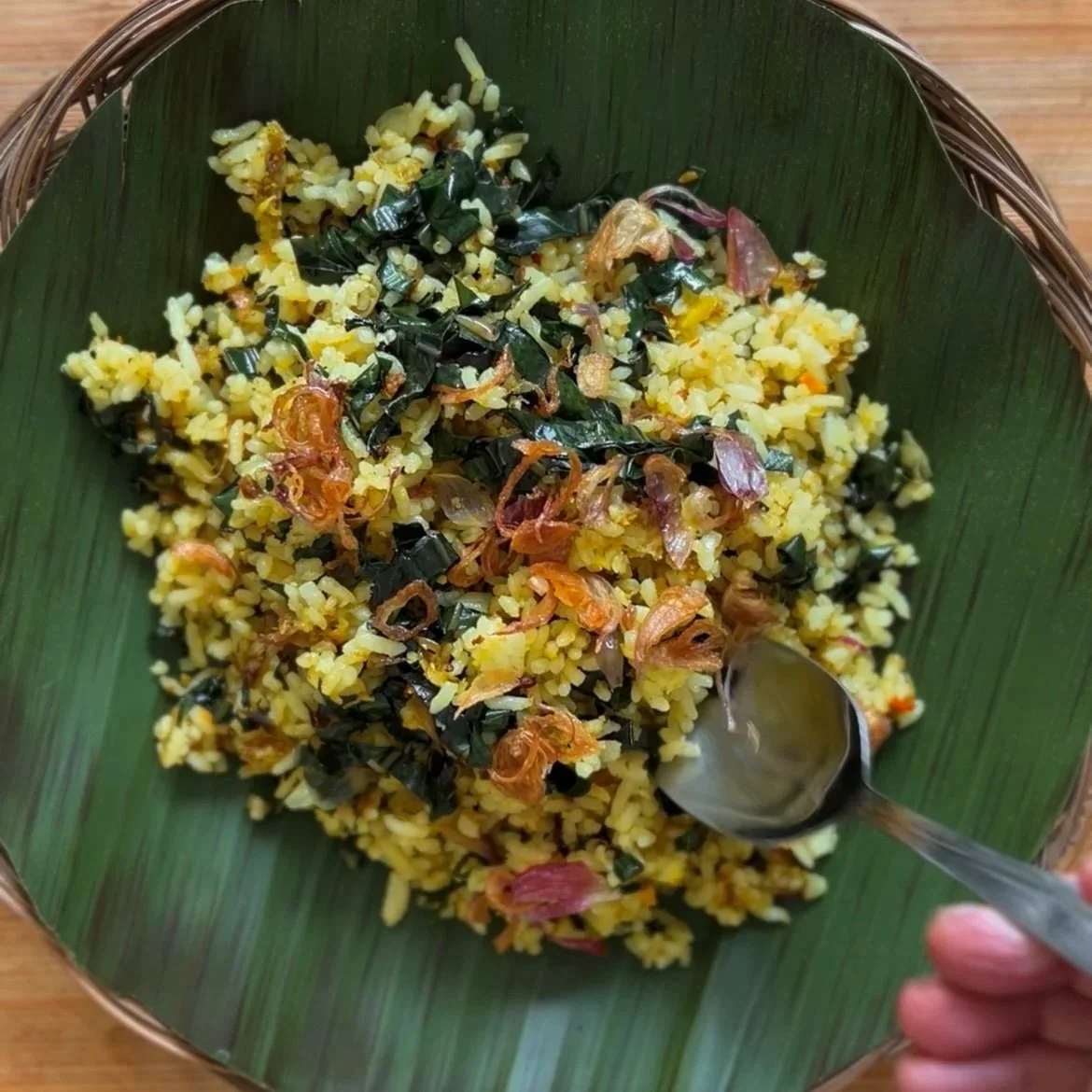
What is Nasi Goreng Mengkudu?
Nasi goreng mengkudu is a Betawinese fried rice dish that highlights noni (mengkudu) leaves for a distinctive, slightly bitter-green note layered into the savory-sweet profile typical of Indonesian fried rice. Cooked rice is stir-fried with aromatics such as shallots, garlic, and chilies, then combined with roughly chopped or blanched noni leaves, yellow spice paste, and sometimes shrimp paste or fish sauce to deepen the umami. The result balances umami with the herbal, medicinal edge of the noni leaves, often finished with a squeeze of lime or a fried egg on top.
Traditionally from the Betawi people of Jakarta, this variant reflects local foraging and the pragmatic use of native plants; noni leaves bring both texture and a subtle bitterness that contrasts with the richness of the fried rice. It is typically served as a hearty, home-style meal and can be adapted with proteins like chicken, prawns, or tofu; for a milder version, the leaves may be briefly blanched to reduce bitterness while retaining their aroma.
The significance
In Betawinese and broader Austronesian cultures, the Noni tree (Morinda citrifolia) — its fruit, leaves, and wood — holds deep practical and symbolic value: Betawinese communities traditionally use crushed noni leaves as poultices for wounds and skin ailments, brew the fruit into bitter remedies for fever and digestive troubles, and incorporate the plant into coastal ritual practices as a protector against illness and misfortune; across Austronesian societies from Madagascar to Polynesia, noni features as a staple of folk pharmacopoeia, a material for tools and dyes, and a cultural emblem of resilience and resourcefulness, its ubiquity in island ecologies making it integral to healing knowledge, spiritual rites, and the transmission of plant-based craftsmanship across generations.
Key Components
Cooked day-old jasmine rice (preferably chilled) to ensure separate, non-mushy grains
Fresh or mashed mengkudu (noni) leaves for its distinctive bitter-sour depth, balanced sparingly
Aromatics: finely sliced shallots and garlic sautéed until translucent and fragrant
Proteins: choice of shrimp, thinly sliced chicken, or fried egg for texture and richness. This recipe is excluding any protein because this is the way it’s prepared traditionally
Spice paste: the paste has a simple yet complex balsamic flavor.
Garnish: fried shallots, cucumber slices, and lemon basil for aroma and contrast
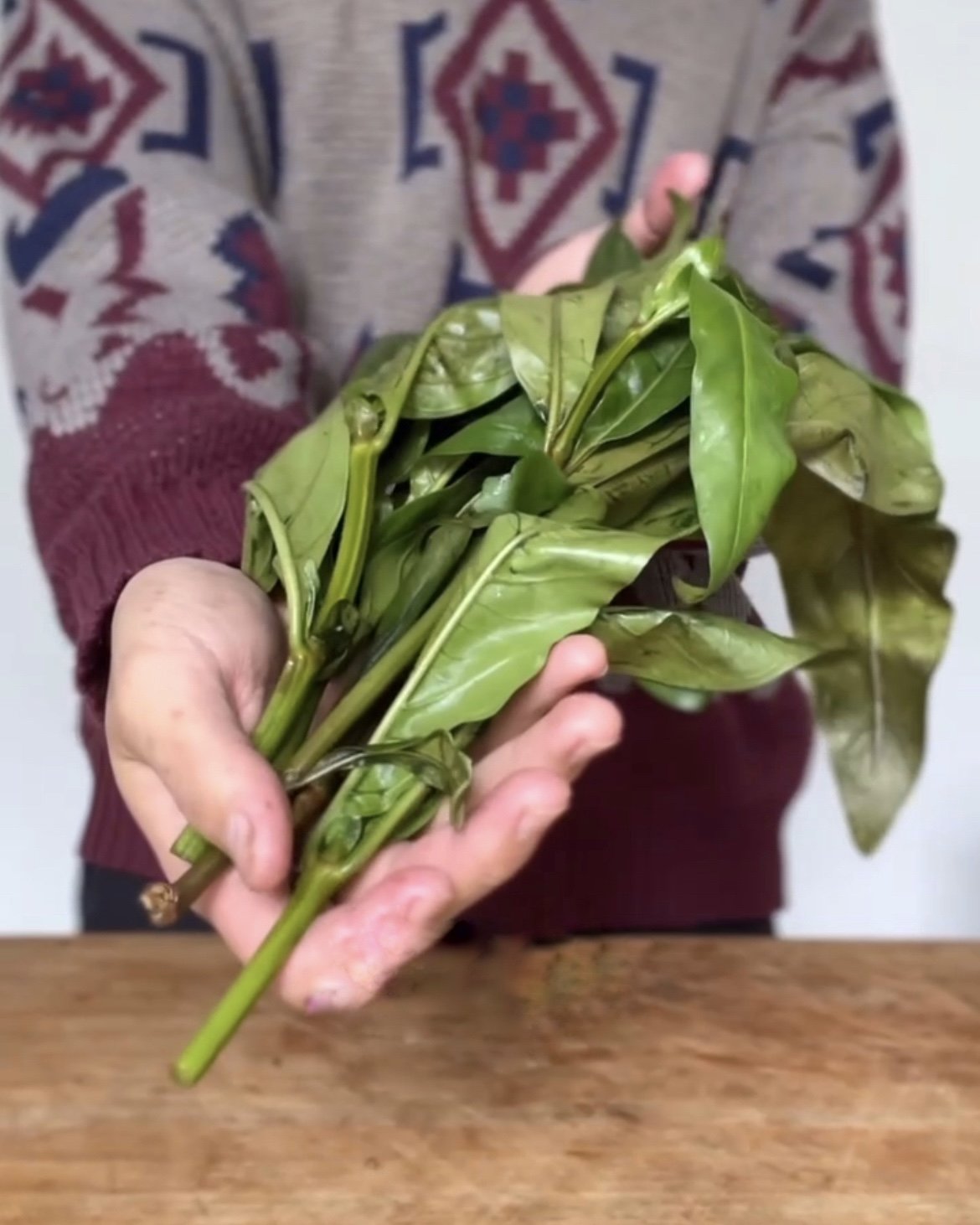
Step-by-step method
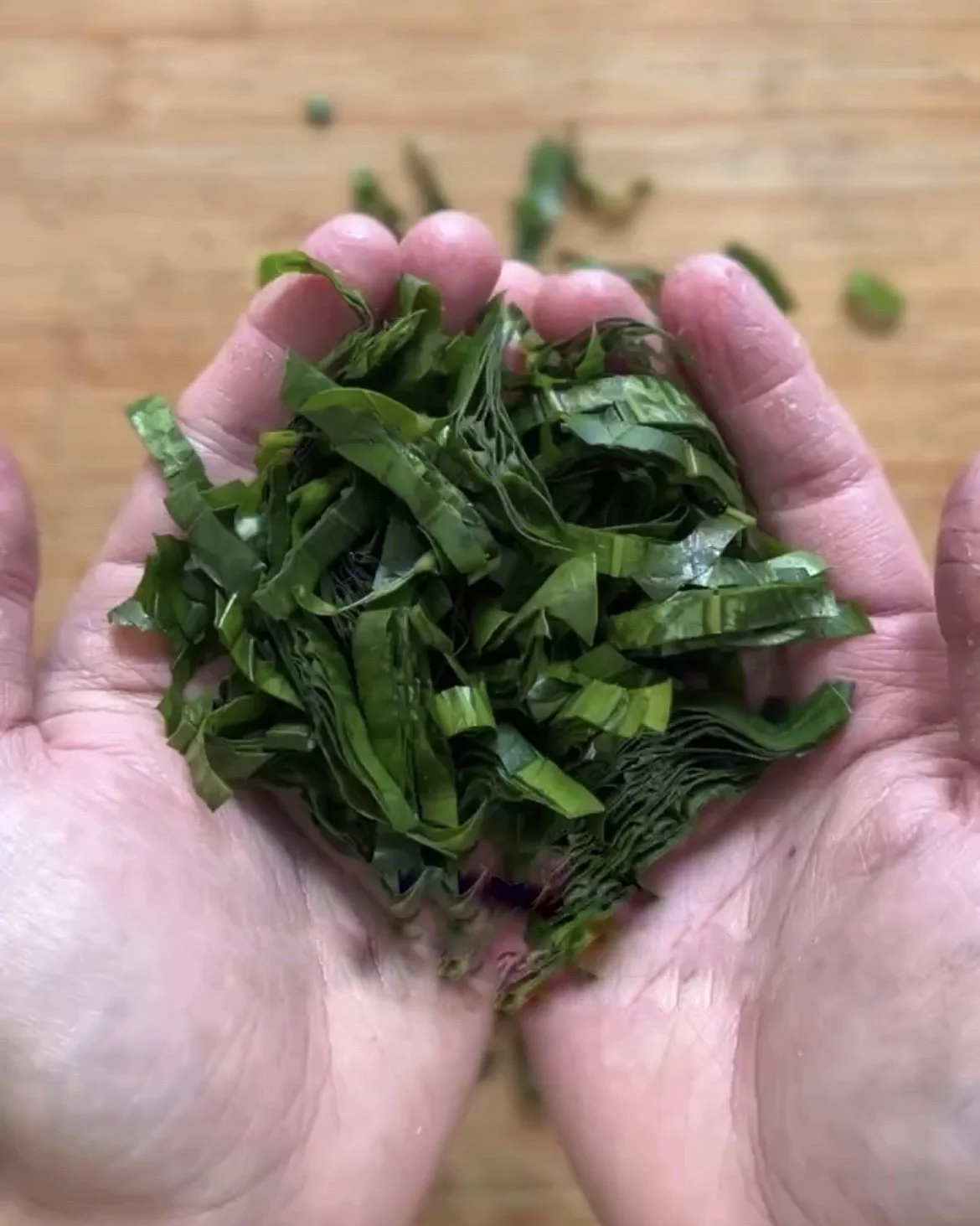
Make sure to harvest the young noni leaves from the trees as they’re easier to bite into. Which are then washed and stacked to be sliced slightly thinly.
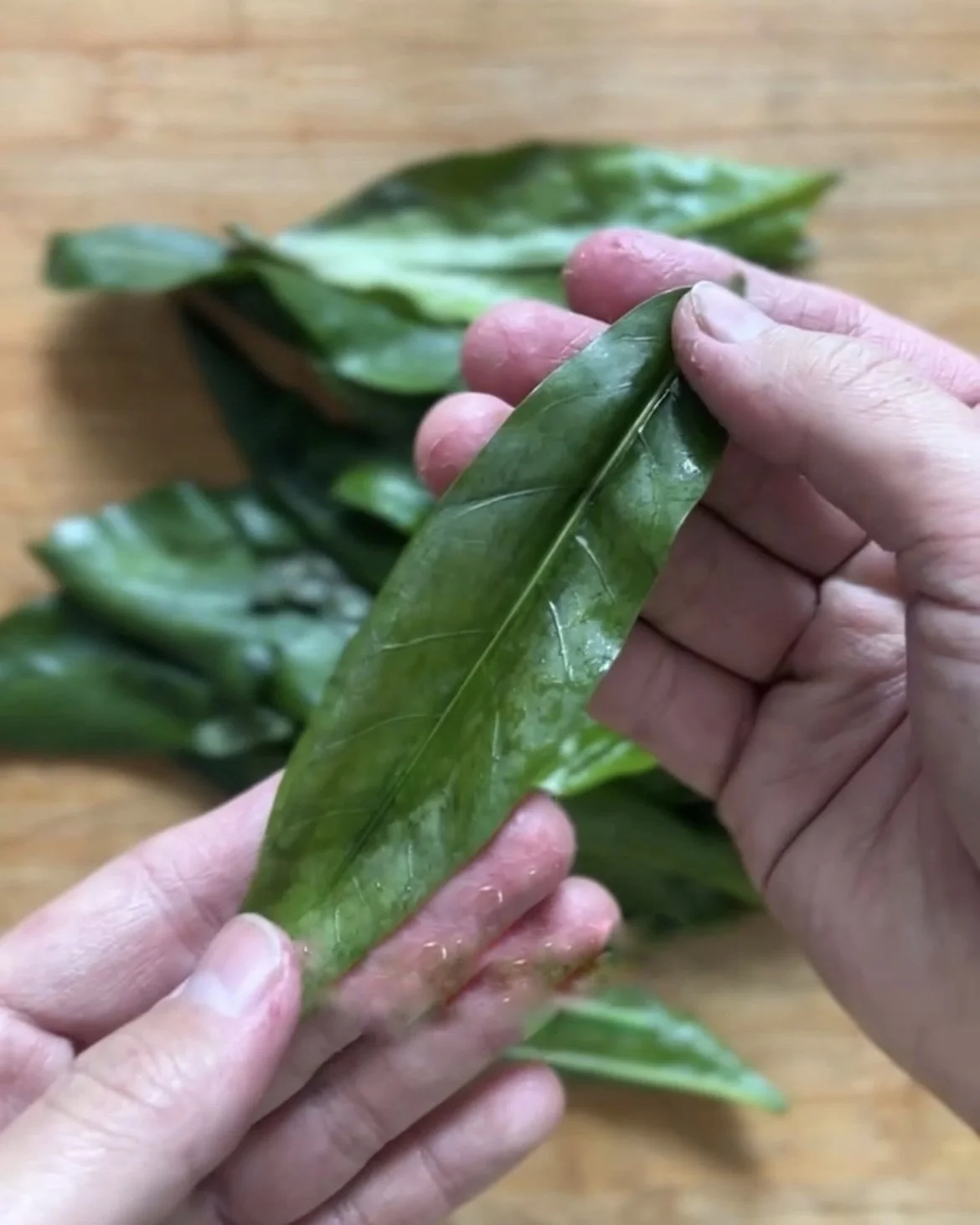
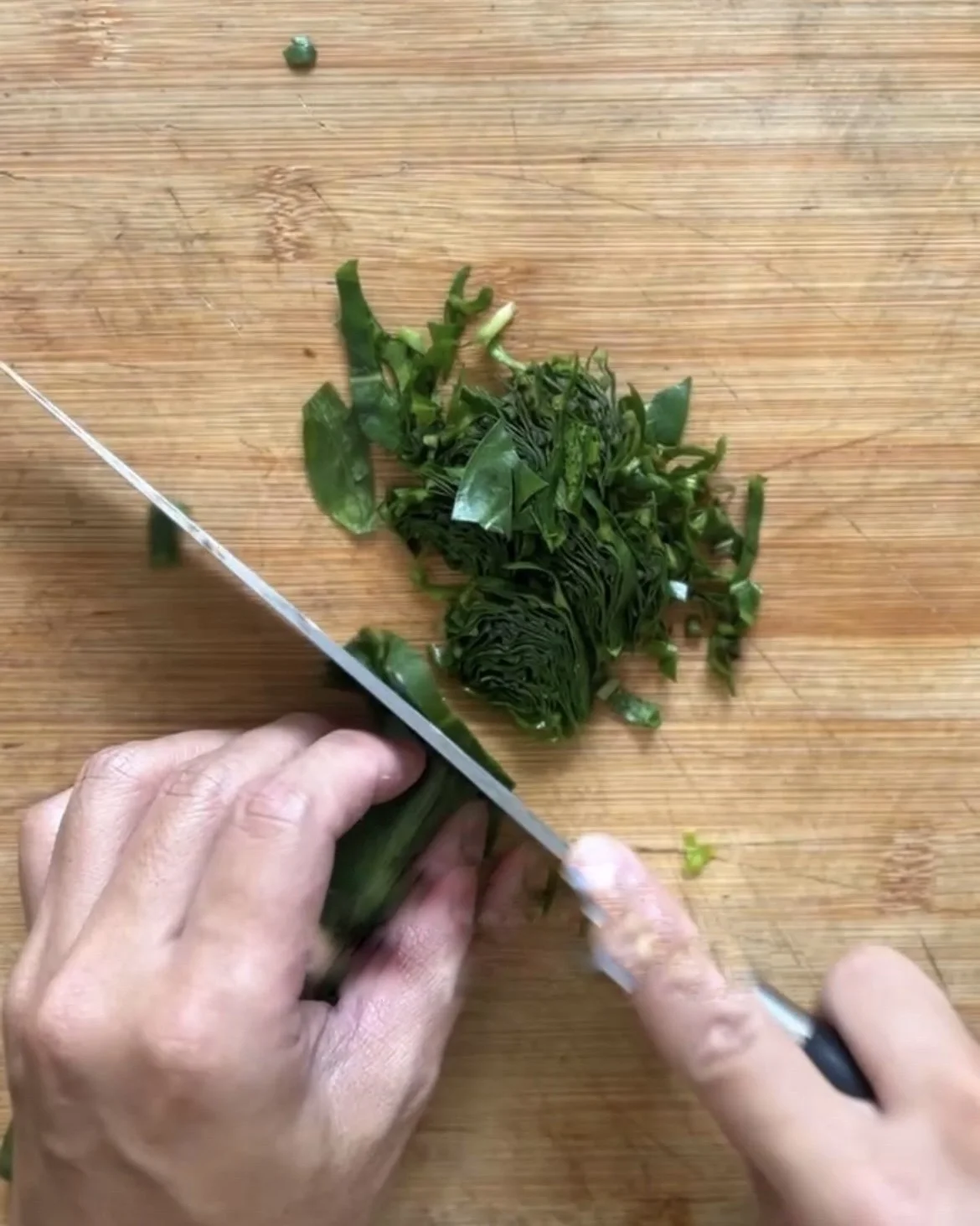
This size of the cutting is perfect for a fried rice format. Refer to this image below for the cut sizes.
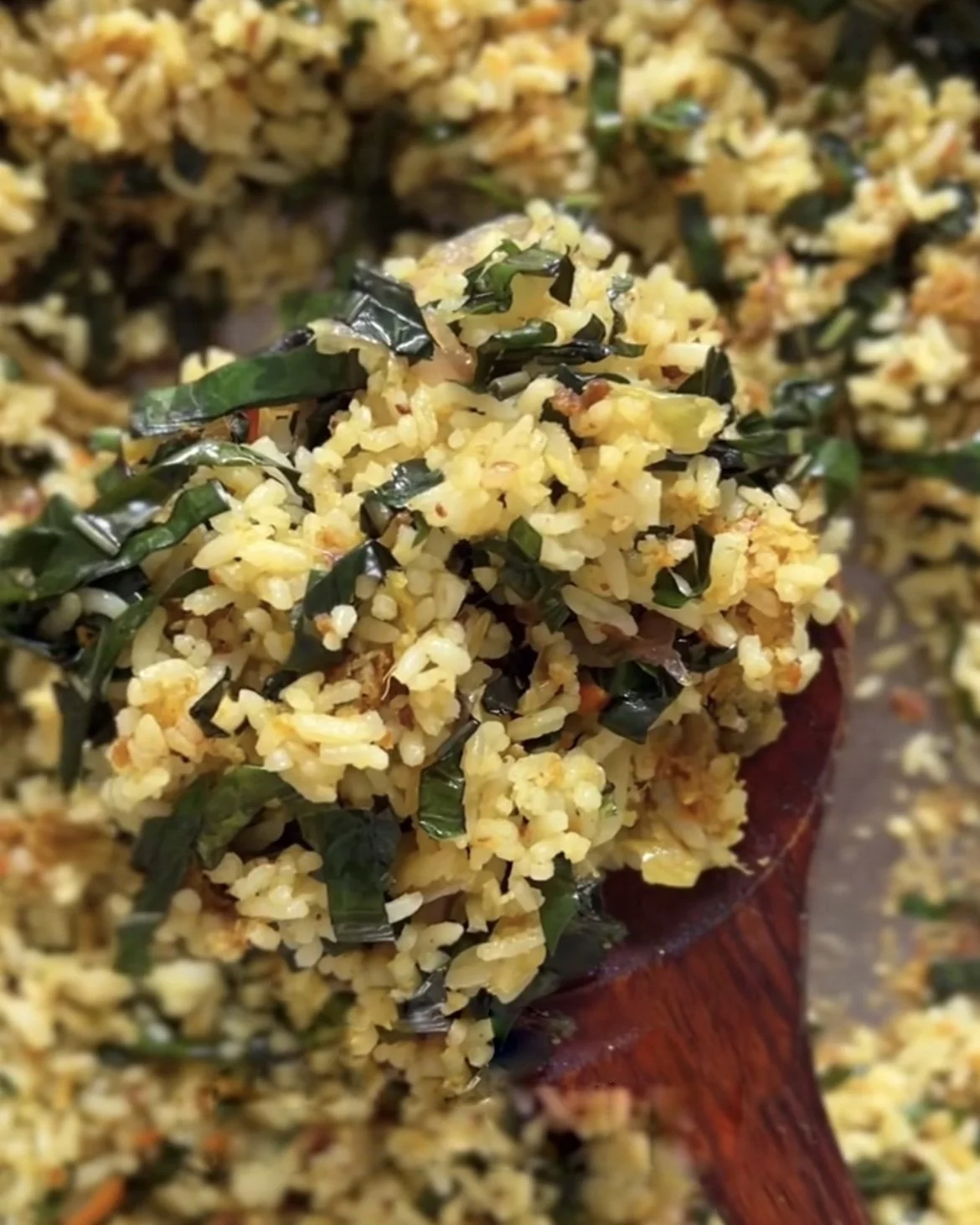
Now prepare the spice blend. Refer to the recipe card on the bottom of this page for the exact ingredients. Some spices are toasted beforehand like candlenuts and turmeric.
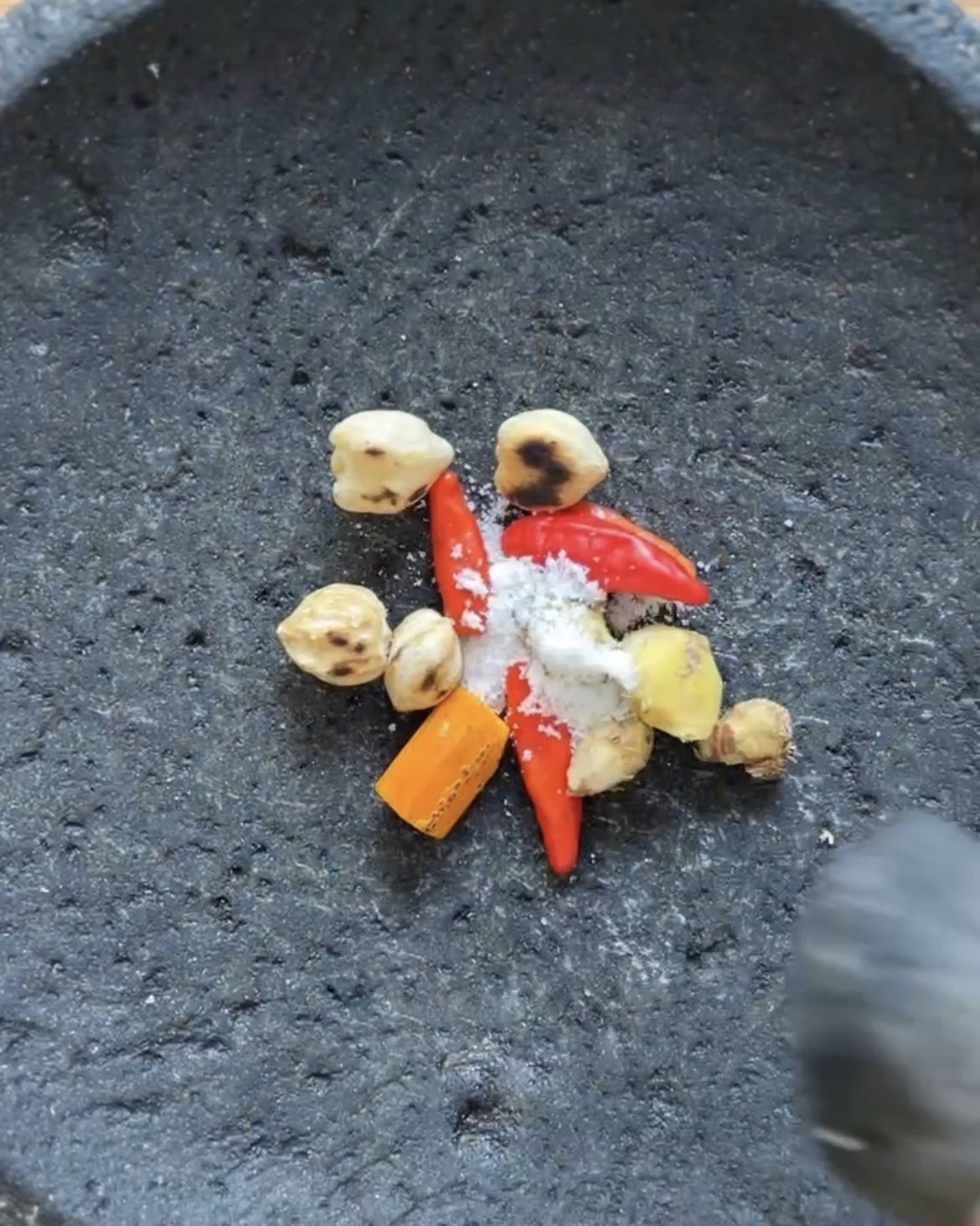
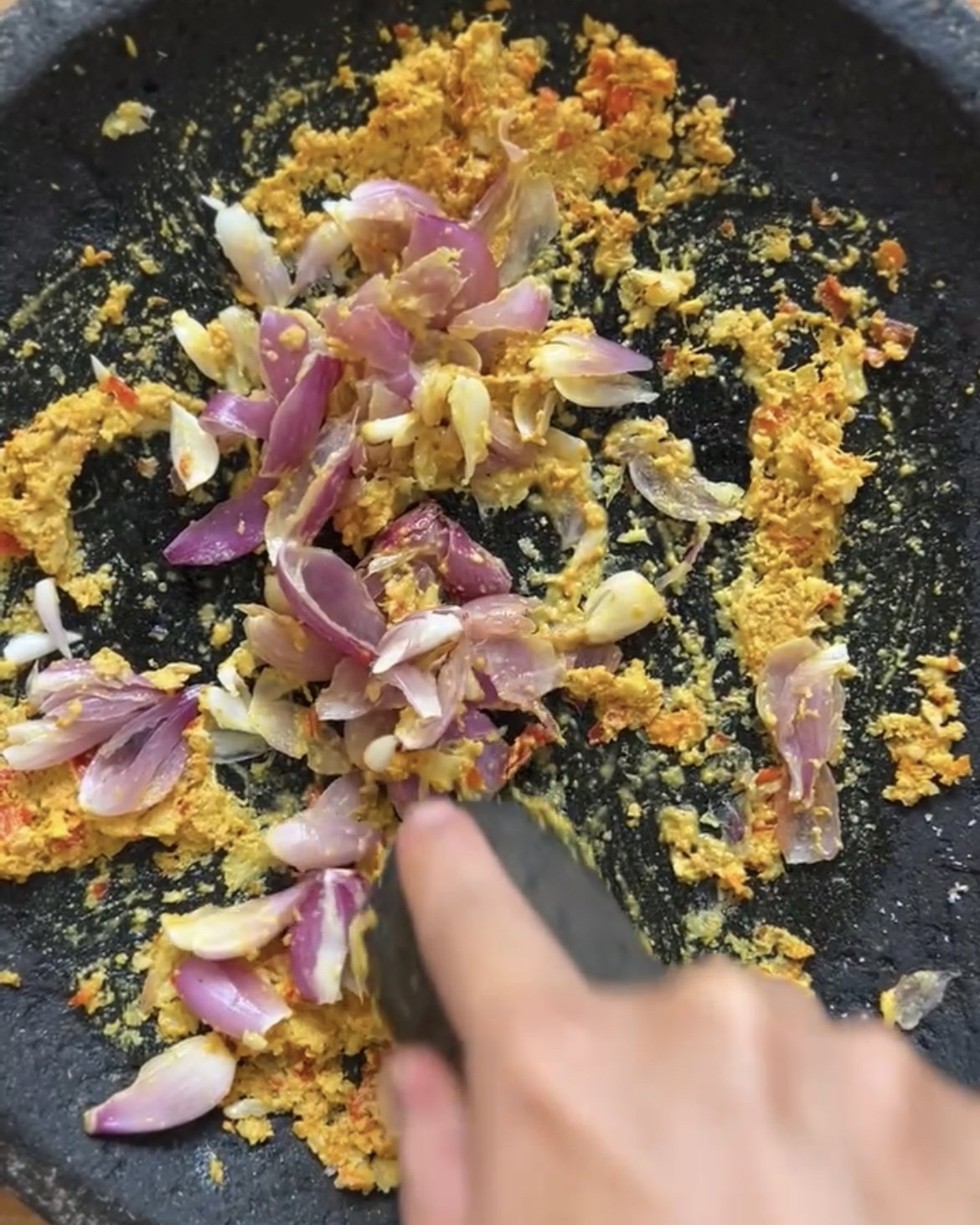
After all the spices are blended using mortar and pestle (doesn’t need to be extra fine), it is now ready to be tossed in the frying pan along with coconut oil and the Noni leaves.
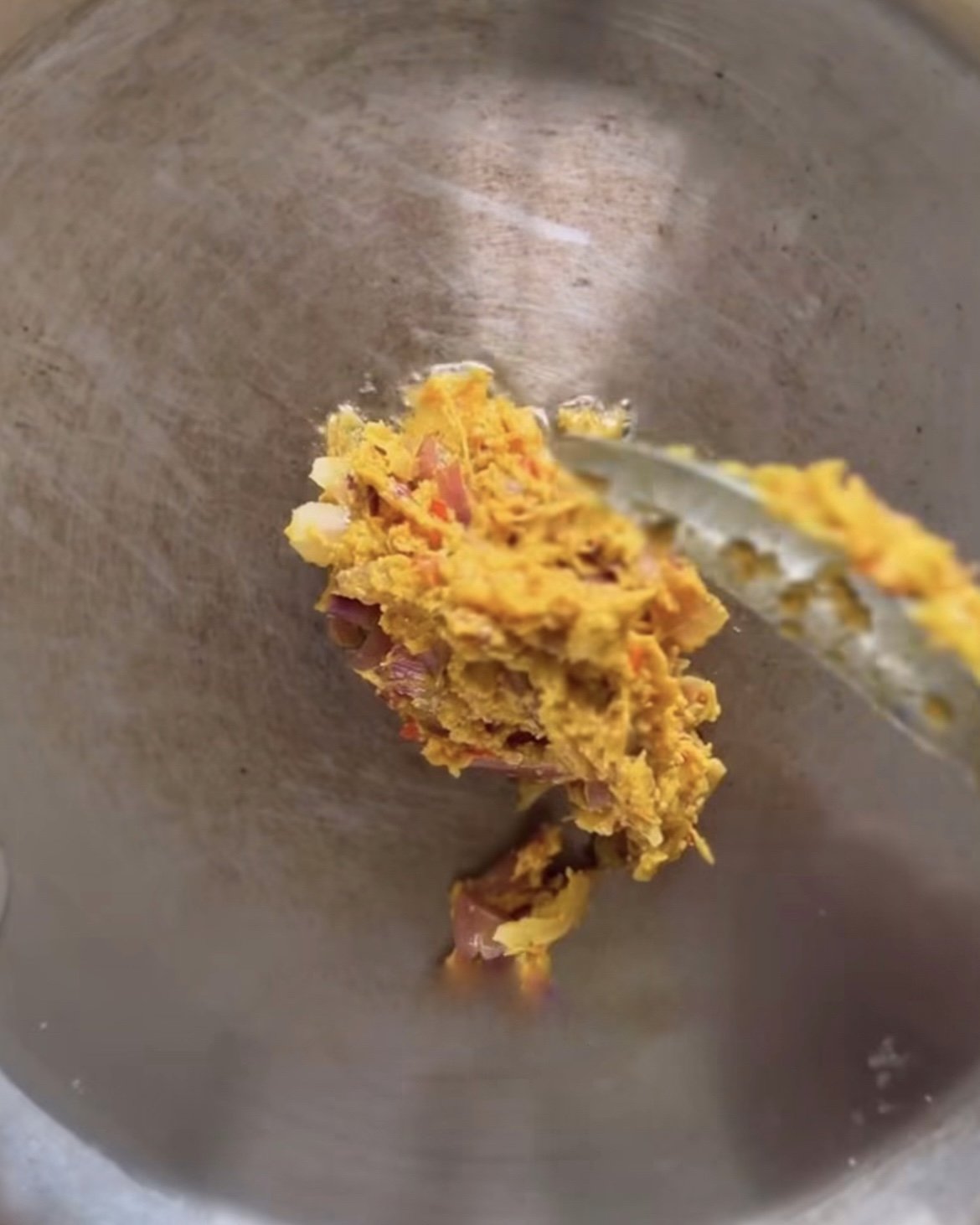
The rest of the method are the same as any other fried rice recipe! E.g. make sure to use day-old rice, make sure to slightly mash some clumpy rice on the pan, etc.
Check out my video for a complete step-by-step method!
Nasi Goreng Mengkudu
Author : Tamtam
Yield : 2 portions
Ingredients
Prep time : 15 mins
Difficulty : Easy
3 cups cooked rice (preferably day-old)
1 cup fresh young noni leaves, sliced
2 tbsp coconut oil
Spice Paste / Bumbu Halus:
½ thumb aromatic ginger (kencur)
1 thumb turmeric
4 charred candlenuts
4 bird’s eye chilies (adjust to taste)
2 cloves garlic
6 shallots
1 tsp plant-based shrimp paste (or over-fermented tempeh)
1 tsp salt
Preparation
Grind all spice paste ingredients into a coarse paste.
Keep it slightly rough rather than smooth. This gives texture and prevents the spices from tasting flat.
Heat coconut oil and sauté the spice paste until fragrant and slightly darkened.
This step is crucial. You are blooming the spices and caramelizing the aromatics so the raw notes disappear and the oil becomes infused.
Add the day-old rice, stirring until everything is well incorporated.
Day-old rice works best because it is drier, allowing each grain to absorb the spice oil without turning mushy.
Fold in the noni leaves, tossing to coat every grain evenly.
Add them toward the end so they stay vibrant and slightly herbal rather than overcooked.
Taste, adjust seasoning if needed, and serve hot.
The final balance should feel savory, aromatic, and gently bitter from the noni leaves.
Important notes
Use young (fresh) mengkudu leaves sparingly — their flavor is potent and slightly bitter; blanch briefly or wilt in the pan to mellow bitterness and preserve vivid green color.
Combine fragrant aromatics (shallots, garlic, sand ginger) and toasted candlenuts for a balanced sweet-savory backbone; add mengkudu near the end to retain texture and aroma.
Adjust seasoning and acidity (lime or tamarind) to counteract any lingering bitterness, and finish with a drizzle of toasted sesame or fried shallot for contrast and depth.