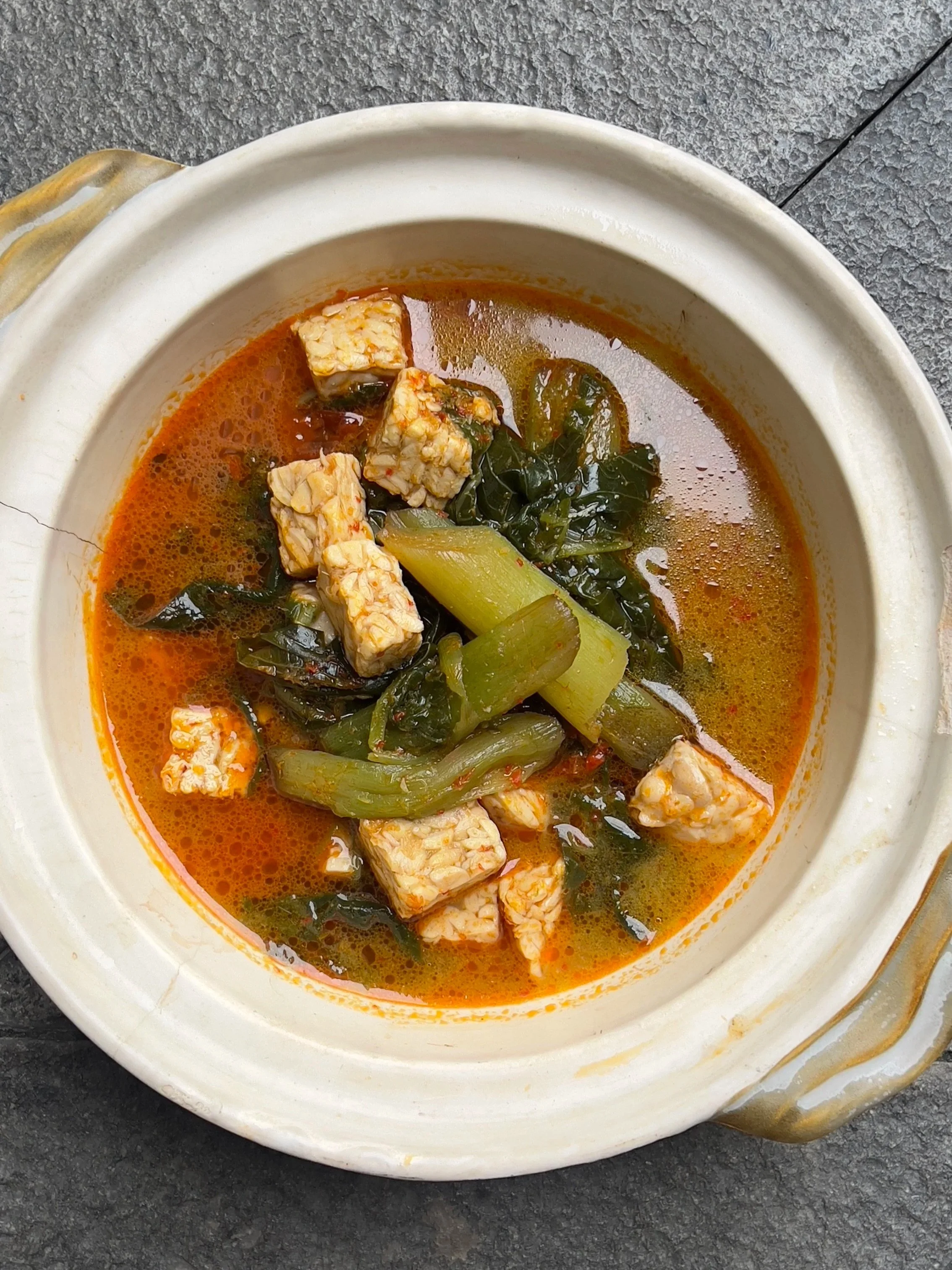
Lempah Darat Keladi
Bangka Belitung
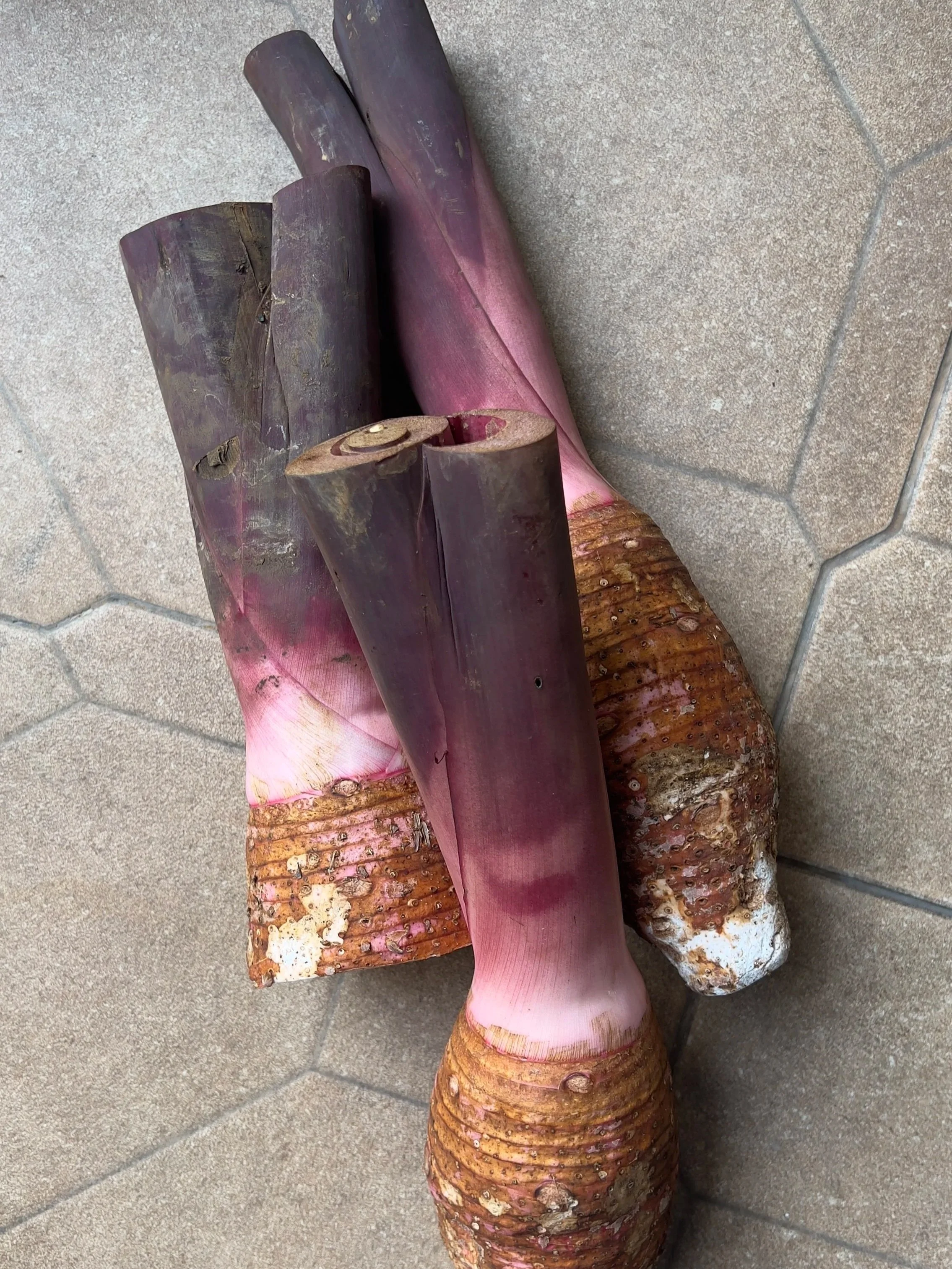
Biodiversity Highlight: Taro Stem
What is Lempah Darat Keladi?
Lempah Darat Keladi is a traditional dish from the Riau Islands and Malay-speaking regions of Indonesia and Malaysia. It’s a savory, coconut-milk–based stew featuring taro (keladi) as the primary ingredient, typically seasoned with local aromatics and spices that give it a rich, slightly tangy, and fragrant profile.
Key Components
Main ingredient: taro (keladi), peeled and cut into chunks. Taro becomes tender and creamy when cooked, contributing a silky texture to the stew.
Broth: coconut milk provides richness and body. Some versions use a mix of coconut milk and water or stock for a lighter consistency.
Flavoring: local aromatics such as lemongrass, galangal or ginger, turmeric, shallots, garlic, and kaffir lime leaves are common. These aromatics give a bright, citrusy, and earthy backbone.
Sour element: many recipes include belimbing wuluh (bilimbi), tamarind, or lime to impart a gentle sourness that balances the coconut creaminess.
Proteins and additions: fish (often salted or smoked), shrimp, or small pieces of meat may be added in some regional variations. Vegetables like long beans or chayote can appear as accompaniments.
Spice level: usually mild to moderate; some versions include chiles for heat, while others keep it subtle.
Flavour profile
Rich and creamy from coconut milk
Earthy, starchy creaminess from taro
Bright citrus-herb notes from lemongrass and kaffir lime leaves
Balanced acidity from tamarind or bilimbi
Mild to moderate aromatic warmth from turmeric, galangal, shallots, and optional chiles

Lempah Darat Keladi
Author : Tamtam Difficulty : Easy Prep time : 30mins Yield : 5 portions
Ingredients
1 lb (450 g) white firm fish fillets (mackerel, snapper, or cod), cut into 1–1½ inch pieces
10 oz (280 g) taro (keladi), peeled and cut into 1–1½ inch cubes
1/2 cup dried sago pearls (or substitute tapioca pearls), soaked in warm water 20 minutes then drained
6 cups (1.4 L) light fish or chicken stock
1 cup water (for adjusting consistency)
2 tbsp tamarind paste (adjust to taste) or 3–4 tbsp fresh tamarind pulp, strained
3–4 tbsp palm sugar or brown sugar (adjust to taste)
2 tbsp cooking oil
4–6 bird’s eye chilies (adjust to heat preference), sliced thin
1 medium onion, thinly sliced
Preparation
Prepare taro carefully: Peel using gloves or wash hands promptly after—taro can irritate skin. Cut into even cubes and rinse.
Blanch taro: In a pot of boiling water, blanch taro cubes 3–4 minutes to remove excess starch and reduce gumminess. Drain and set aside.
Sear aromatics: In a large saucepan or pot, heat oil over medium heat. Sauté onion until translucent then add garlic and sliced chilies; cook until fragrant (about 1 minute).
Build the broth: Add bruised galangal, smashed lemongrass, and kaffir lime leaves; stir briefly. Pour in stock and bring to a gentle simmer.
Add taro and sago: Add blanched taro cubes and soaked, drained sago pearls to the simmering broth. Cook 8–12 minutes, or until taro is tender and sago pearls turn translucent. Stir occasionally to prevent sago from clumping.
Season and balance: Stir in tamarind paste and palm sugar. Taste and adjust: you want a bright, tangy-slightly sweet balance. Add salt and white pepper to taste.
Finish with fish and vegetables: Gently add fish pieces and tomato quarters (and long beans if using). Simmer gently 4–6 minutes, until fish is just cooked through and tomatoes have softened. Avoid vigorous boiling so the fish remains tender.
Adjust consistency: If broth is too thick from starchy taro and sago, add up to 1 cup water or extra stock to reach desired soupiness. Re-check seasoning.
Serve: Ladle into bowls. Garnish with cilantro or daun kesum and additional sliced chilies if desired. Serve with lime wedges.
Important notes
Use a firm, starchy taro (keladi) and handle it with care: peel with gloves or rinse hands frequently to avoid skin irritation from calcium oxalate; cut into uniform chunks so the root cooks evenly and absorbs the spices without turning mushy.
Build a balanced spice base and simmer gently: sauté shallots, garlic, galangal, turmeric, and lemongrass until fragrant, then add coconut milk and tamarind or asam gelugur; cook on low heat to prevent coconut milk from splitting and to let flavors meld into the taro.
Finish with acidity and fresh aromatics: adjust seasoning with salt and a touch more tamarind if needed, and add fresh cilantro or Vietnamese coriander and sliced chili at the end to brighten the rich, earthy stew.