Pepes Jantung Pisang
𝘊𝘢𝘣𝘢𝘪 𝘑𝘢𝘸𝘢 / Javanese Long Pepper 🌶️
Cabai jawa is one of those spices many Indonesians recognize by name, but rarely by use. Today it’s considered scarce even in local markets, often sold dried and relegated to jamu and medicinal drinks, while its fresh form remains largely unfamiliar in everyday cooking.
Long pepper itself is anything but new. Archaeological evidence shows that Piper longum was already being traded thousands of years ago, with remains and residues found in ancient Mesopotamian contexts along river-based trade routes — carried from South and Southeast Asia as both spice and medicine. Its presence there speaks less to novelty, and more to how deeply embedded this spice once was in early human diets. This curiosity took me to Kulon Progo, where I met Bu Sukma, whose family has been growing cabai jawa. Walking through their farm and listening to their stories reminded me that many culinary records in Indonesia were passed down orally, long before they were written down. One dish they still cook with fresh cabai jawa is pepes.
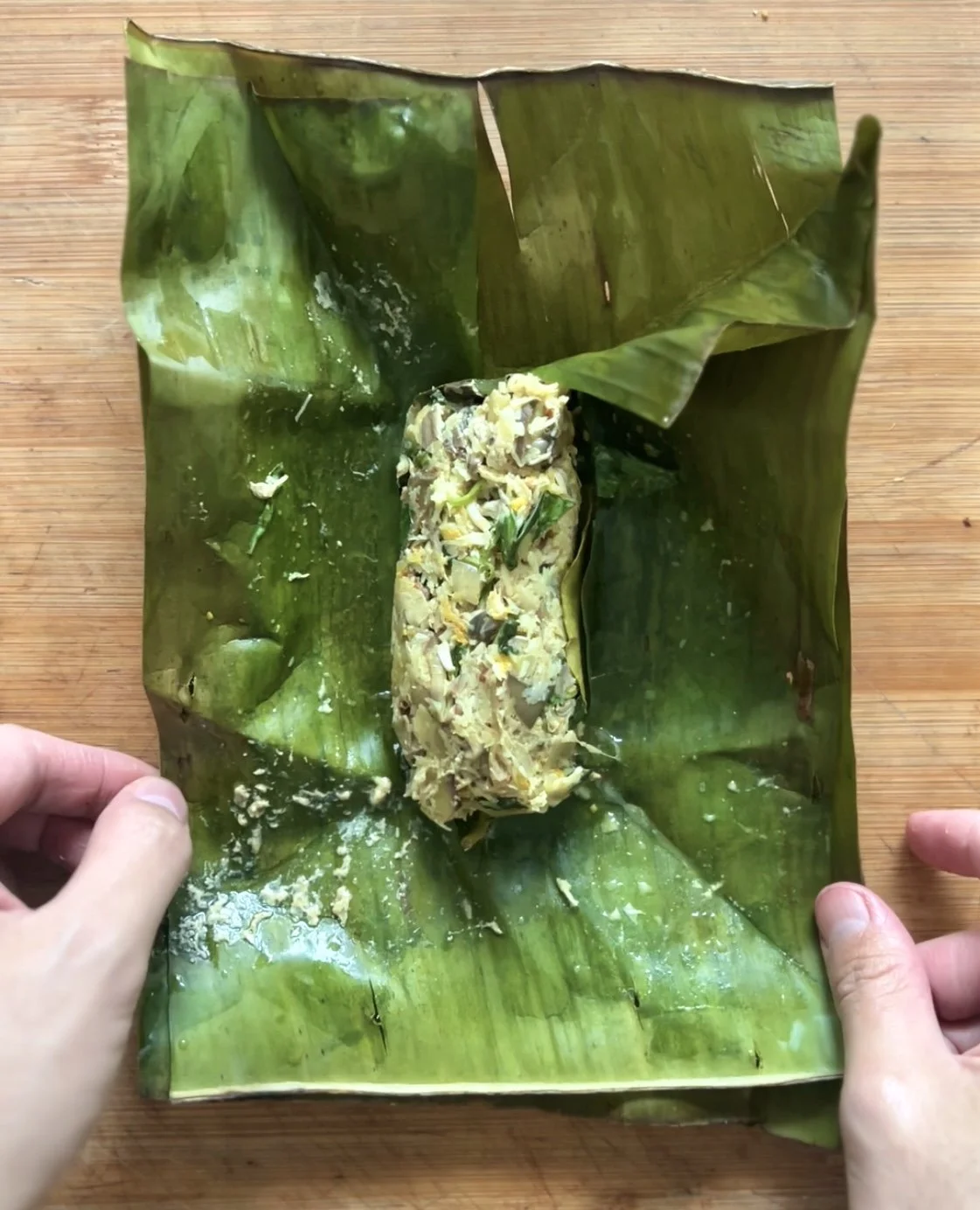
Pepes can be many things — most commonly fish, an ancient and ancestral protein. But in this video, I’m making pepes jantung pisang (banana blossom), a preparation that sits between pepes and botok, because I use grated coconut. One small but important detail: banana blossoms should be sliced directly into boiling salted water to prevent oxidation and bitterness.
⸻
Pepes Jantung Pisang Cabai Jawa:
• 500 g jantung pisang (banana blossom), thinly sliced
• 1 tbsp sea salt
• 80 g grated coconut (slightly coarse)
• 3–4 fresh cabai jawa
• 4 shallots
• 3 cloves garlic
• 3 cm galangal
• 2 cm turmeric
• 2 cm ginger
• 3 candlenuts
• a handful of lemon basil
• 4 bay leaves
• 6 lime leaves
• Banana leaves, for wrapping
I owe a credit to @mgdalenaf for introducing me to Bu Sukma, so here’s an appreciation post for her to have uplifted this endangered knowledge 🤍
#veganrecipe #indonesianfood
